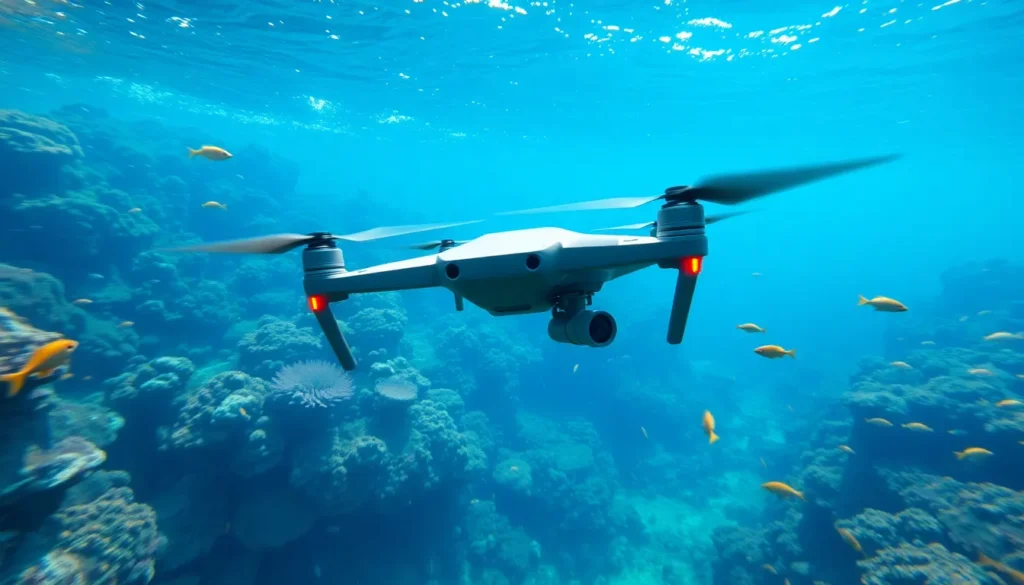
Imagine exploring the ocean’s depths without getting wet or battling a school of curious fish. Enter underwater drones, the tech-savvy marvels that let adventurers and researchers alike dive into the aquatic world from the comfort of dry land. These sleek machines are revolutionizing how we interact with the mysteries beneath the waves, capturing stunning visuals and gathering data that was once only accessible to deep-sea divers.
Overview of Underwater Drones
Underwater drones represent a significant advancement in marine technology, enabling exploration and data collection without human divers. These remotely operated vehicles, often known as ROVs, feature high-definition cameras that capture detailed images and videos of underwater ecosystems. They assist researchers in studying marine life, mapping ocean floors, and inspecting underwater infrastructure.
Various models exist, catering to different applications. For instance, commercial underwater drones typically focus on tasks like inspections of pipelines and offshore structures, while recreational models allow hobbyists to explore marine environments from a distance. Durability in harsh conditions, along with the ability to withstand water pressure, distinguishes high-quality underwater drones.
User interfaces are designed for ease of control. Most drones come with intuitive remotes or mobile apps, allowing users to navigate effortlessly. Real-time feedback includes video feeds and data analysis, enhancing the operational experience significantly. Battery life varies among models, but many offer several hours of operation on a single charge, making them suitable for extended missions.
Price ranges for underwater drones are broad. Affordable options start around $100, catering to casual users, while more sophisticated models can exceed $15,000, appealing to professionals and researchers. Technological advancements continue to drive innovation in this field, leading to features like automated mission planning and enhanced navigation systems.
Environmental monitoring, underwater photography, and archaeological exploration are key areas benefiting from these drones. Industries increasingly rely on underwater drones to gather critical information while minimizing the ecological impact of human activities. As demand grows, the future of underwater drones looks promising, paving the way for deeper and safer exploration of our oceans.
Types of Underwater Drones
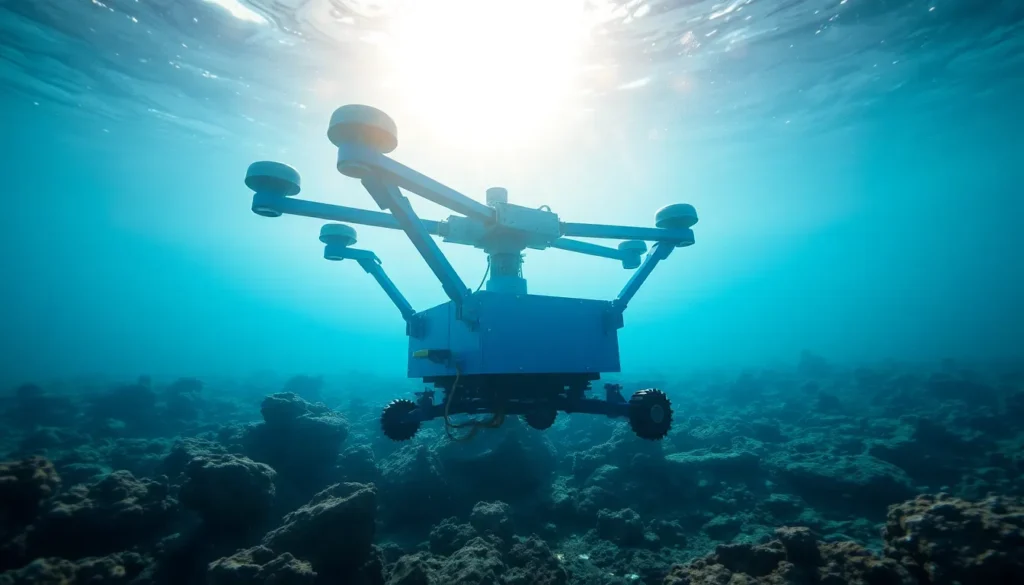
Underwater drones come in various types, each serving specific purposes. Their distinct designs and functionalities allow users to choose the right model for their needs.
Autonomous Underwater Vehicles (AUVs)
AUVs operate independently, navigating pre-programmed routes without real-time input from operators. These drones excel in tasks such as oceanographic surveys, underwater mapping, and data collection. Equipped with advanced sensors and sonar, AUVs gather data on temperature, salinity, and depth while exploring depths of up to 6,000 meters. Popular in marine research and commercial applications, they enable extensive exploration with minimal human intervention, making them essential for studying underwater environments.
Remotely Operated Vehicles (ROVs)
ROVs require a tether connection to operators for control and data transmission. They offer real-time feedback through video feeds, making them ideal for inspections and repairs. ROVs are commonly used in oil and gas industries for pipeline inspections and in marine archaeology to explore shipwrecks. Their robust design withstands harsh conditions, allowing them to dive to depths of around 3,000 meters or more. Equipped with various tools, ROVs can perform tasks like underwater welding and debris recovery, showcasing their versatility in various sectors.
Applications of Underwater Drones
Underwater drones serve various essential functions across numerous fields. Their versatility enhances exploration, monitoring, and inspection.
Marine Research
Marine researchers utilize underwater drones to gather data from previously inaccessible depths. These unmanned vehicles provide high-definition imagery and video, facilitating the observation of marine life in their natural habitats. Researchers can assess species populations and behaviors, contributing to greater understanding of biodiversity. For instance, studying coral reef ecosystems reveals critical information about health and resilience. Drones also assist in mapping ocean floors, which supports habitat preservation efforts. The ability to collect data without disturbing environments enhances the efficacy of marine studies.
Environmental Monitoring
Environmental agencies employ underwater drones to monitor the health of aquatic ecosystems. These devices measure water quality parameters like temperature, salinity, and turbidity, ensuring accurate assessments of ecosystem conditions. Drones capture real-time data that helps track pollution levels and detect signs of harmful algal blooms. For example, underwater monitoring of coastal areas aids in the protection of sensitive marine habitats. Agencies can swiftly respond to environmental threats, minimizing potential damage. Utilizing drones improves surveillance efficiency and provides critical information that supports conservation initiatives.
Underwater Inspection
Industries often rely on underwater drones for inspecting infrastructure and ensuring safety. These vehicles evaluate the condition of underwater structures like bridges, pipelines, and oil rigs. High-resolution cameras capture detailed visuals of potential issues, facilitating timely maintenance and repairs. For instance, inspections of offshore oil platforms ensure they meet operational standards. Drones reduce risks associated with human divers while cutting inspection costs and time. The ability to conduct thorough and accurate inspections reinforces operational reliability, making underwater drones indispensable in various sectors.
Advantages of Using Underwater Drones
Underwater drones offer numerous benefits, making them essential tools for various applications.
Cost-Effectiveness
Underwater drones provide significant cost savings compared to traditional methods. Using a drone for inspections often eliminates the need for expensive diving crews or specialized equipment. Many commercial models are available at rates below $1,000, whereas hiring divers can incur costs ranging from $2,000 to $10,000 per day. Moreover, ongoing operational expenses diminish with drones due to their ability to gather data more quickly. Increased efficiency translates to reduced labor and equipment costs, making underwater drones an attractive investment for various industries.
Enhanced Safety
Safety improves tremendously when using underwater drones. They operate in hazardous conditions without risking human divers. Inspections of submerged structures or potentially dangerous environments no longer pose threats to personnel. With drones performing tasks, users avoid exposure to hazards such as strong currents or extreme depths. Furthermore, real-time video feeds allow operators to assess environments and make informed decisions without entering the water. This capability promotes overall safety in marine operations by minimizing risks associated with underwater exploration.
Challenges and Limitations
Underwater drones face several challenges and limitations that can affect their performance and effectiveness in various environments.
Battery Life
Battery life remains a critical constraint for underwater drones. Most models operate for about 3 to 6 hours on a single charge, which limits extended missions. Users often need to plan for regular recharging. The energy consumption directly relates to depth, payload, and operational conditions. For instance, deeper dives require more power, as the water pressure affects performance. Some manufacturers are developing improved battery technologies, but significant advancements are still necessary to address this limitation.
Navigation Issues
Navigation issues can complicate operations, especially in complex underwater environments. GPS signals do not penetrate water, impacting location accuracy for underwater drones. Pilots rely on alternative navigation methods, such as sonar and inertial navigation systems. These alternatives may introduce challenges, especially in areas with strong currents or limited visibility. Accurate positioning becomes crucial for tasks like inspections and surveys. Users frequently face difficulties when transferring to or from surface-based navigation systems, which can lead to operational inefficiencies. Enhancements in navigation technology could mitigate these challenges in the future.
Underwater drones are revolutionizing the way individuals and industries engage with the ocean. Their ability to gather critical data and offer stunning visuals without human immersion makes them invaluable tools for research and exploration. As technology advances these devices will continue to enhance capabilities in marine monitoring and infrastructure inspections.
The versatility of underwater drones opens doors to new applications across various fields from environmental conservation to archaeological studies. While challenges like battery life and navigation persist ongoing innovations promise to address these limitations.
With their cost-effectiveness and improved safety features underwater drones are set to become essential assets for anyone looking to explore the depths of our oceans while minimizing risks and maximizing efficiency. The future of underwater exploration is bright thanks to these remarkable machines.