In a universe filled with mysteries and the occasional black hole, cosmic exploration companies are boldly going where no one has gone before—well, at least since the last space race. These innovative companies are not just sending rockets into the void; they’re redefining what it means to explore the cosmos. With visions of Mars colonies and asteroid mining, they’re making space travel seem as attainable as a weekend road trip.
Overview Of Cosmic Exploration Companies
Cosmic exploration companies are at the forefront of advancing space technology. They specialize in projects that aim to expand human presence beyond Earth. A range of firms exists, each with unique focus areas and goals.
SpaceX, founded by Elon Musk in 2002, targets affordable space travel and aims for human colonization of Mars. Blue Origin, established by Jeff Bezos, emphasizes developing reusable rocket technology to reduce costs associated with space missions. Virgin Galactic, led by Richard Branson, concentrates on suborbital space tourism, offering civilians a taste of space travel.
Additionally, companies like Astra and Rocket Lab are working on smaller launch vehicles, addressing the growing demand for satellite deployment. Each company operates under a different business model, catering to various sectors in the space industry. For instance, Lockheed Martin and Northrop Grumman focus on government contracts, contributing to military and scientific missions.
New entrants, such as Relativity Space, leverage 3D printing technology to create rockets more efficiently. Innovative approaches, such as those by Planet Labs, involve creating earth observation satellites to monitor environmental changes.
These firms collectively contribute to a rapidly evolving landscape, with over 100 active companies involved in space exploration. Their initiatives offer a blend of scientific research, commercial opportunities, and the potential for groundbreaking discoveries. As these companies work towards ambitious objectives, they reshape public perception about accessibility in space exploration. The culmination of these efforts promises exciting developments in our understanding of the cosmos.
Key Players In The Industry
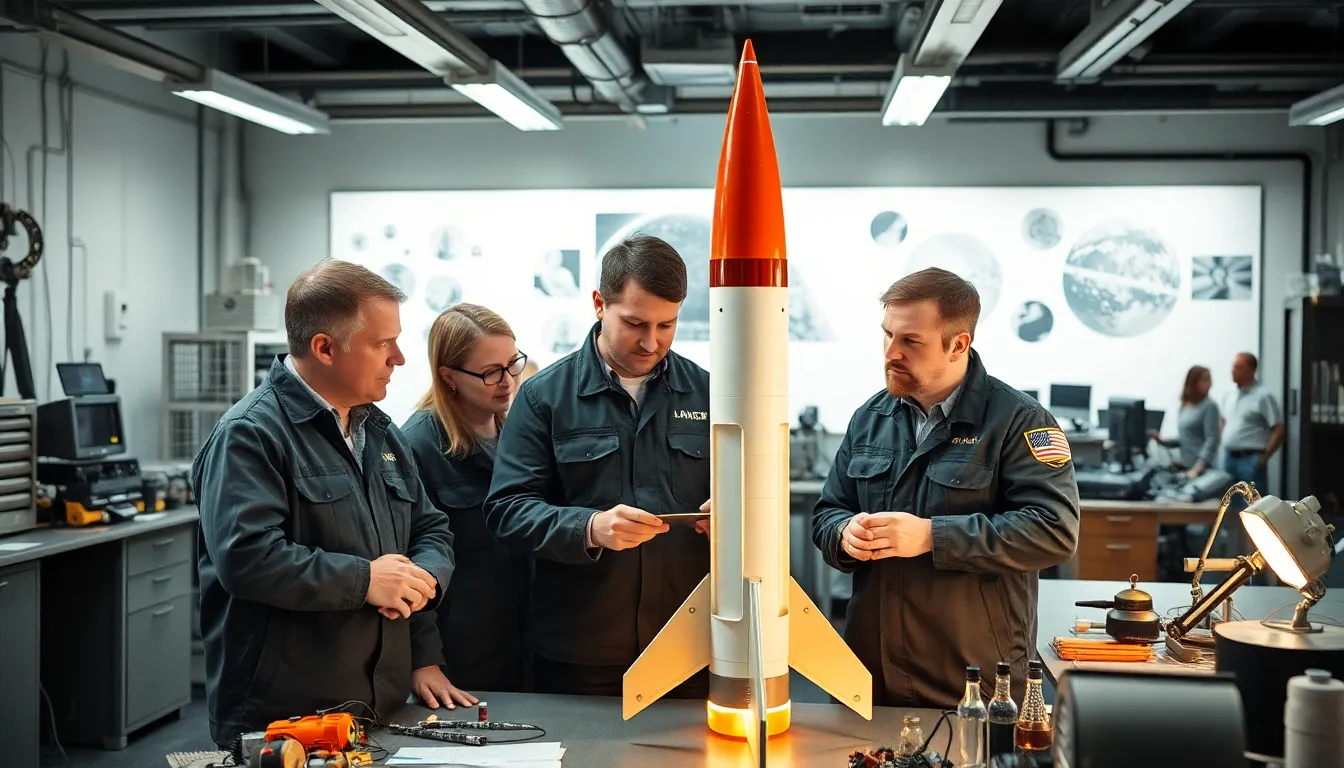
The cosmic exploration industry features a diverse range of companies, from established giants to innovative startups shaping the future of space travel.
Established Companies
SpaceX stands out for its goal of affordable space travel and plans for human colonization of Mars. Blue Origin focuses on manufacturing reusable rockets, which enhances the sustainability of space missions. Virgin Galactic provides suborbital flights for space tourism, making space accessible to civilians. Lockheed Martin and Northrop Grumman secure numerous government contracts for military and scientific projects. Companies like Astra and Rocket Lab develop smaller vehicles for satellite launches, catering to the growing demand for reliable satellite deployment. Each of these firms contributes to advancements in technology, expanding the possibilities of space missions.
Emerging Startups
Emerging startups are also gaining ground in cosmic exploration. Relativity Space utilizes 3D printing for efficient rocket development, significantly reducing production times. Planet Labs specializes in earth observation satellites, helping to monitor environmental changes from space. Other newcomers focus on niche markets, such as satellite servicing and lunar exploration initiatives. Companies like Axiom Space aim to facilitate commercial missions to the International Space Station, enhancing opportunities for private sector involvement in space. This influx of startups signals a vibrant future, potentially leading to groundbreaking developments and a more accessible space frontier.
Technologies Driving Cosmic Exploration
Innovations in technology play a critical role in advancing cosmic exploration. Companies leverage these advancements to enhance missions and push the boundaries of outer space.
Rockets and Spacecraft
Rockets embody the primary vehicles for space exploration. SpaceX’s Falcon 9 revolutionizes cost-effective access to orbit through reusable rocket technology. Blue Origin’s New Shepard focuses on suborbital flights for space tourism. Companies like Rocket Lab offer Electron rockets, tailored for launching small satellites efficiently. Each rocket differs in design and capability, catering to various mission requirements. They enable a new era of space travel, making it increasingly feasible.
Ground Support Systems
Ground support systems provide essential infrastructure for successful missions. Companies utilize tracking stations to monitor spacecraft during launches and in orbit. Communication networks ensure real-time data transmission between Earth and spacecraft. Innovators design mobile launch platforms for flexibility in launching various missions. Robust ground support equipment significantly enhances the reliability and safety of space operations. These systems ensure that each launch meets stringent standards for success and accuracy.
Notable Missions and Achievements
Cosmic exploration companies have made significant strides in space missions, showcasing their capabilities and ambitions.
Recent Launches
SpaceX recently accomplished another milestone with its Falcon 9 rocket, delivering 60 Starlink satellites into orbit. Blue Origin’s New Shepard completed successful suborbital flights, enabling research and tourism. Rocket Lab achieved a major feat by launching its Electron rocket, deploying multiple satellites for various clients. Astra also made headlines with a successful launch of its small satellite delivery service, proving its capacity in the growing market. These launches reflect not only technological advancements but also the increasing demand for space access.
Future Missions
Looking ahead, SpaceX plans to send humans to Mars by the late 2020s, aiming for an ambitious human settlement on the Red Planet. Blue Origin intends to enhance its lunar lander program, targeting potential missions to the Moon’s surface. Virgin Galactic is set to expand its commercial space tourism offerings, making suborbital flights more accessible. Companies like Axiom Space propose missions to the International Space Station, focusing on research and commercial opportunities. Emerging firms are also exploring asteroid mining prospects, which could redefine resource acquisition in space.
Challenges Faced By Cosmic Exploration Companies
Cosmic exploration companies encounter various challenges that impact their progress and innovation. Key issues include funding, investment, and regulatory hurdles that hinder their ambitions.
Funding and Investment
Securing adequate funding poses a significant challenge for cosmic exploration companies. Many startups rely on private investors and venture capital to finance their missions. Established firms like SpaceX and Blue Origin typically attract substantial investment through government contracts and partnerships. In 2021, SpaceX raised over $1.9 billion, highlighting the investment interest in space exploration. Emerging companies often struggle to demonstrate viable business models to attract necessary capital. Limited access to funding can restrict research and development efforts, delaying project timelines and innovations.
Regulatory Hurdles
Navigating regulatory landscapes complicates operations for cosmic exploration companies. Government agencies, such as the Federal Aviation Administration (FAA) and the National Aeronautics and Space Administration (NASA), impose strict regulations on space launches and operations. Adhering to guidelines can extend timelines and increase costs. For example, obtaining launch permits involves lengthy bureaucratic processes that stress resources. International regulations can create additional complications, especially for companies engaging in collaborations across borders. Compliance with constantly evolving regulations requires dedicated legal and administrative teams, diverting focus from core technological advancements.
The landscape of cosmic exploration is rapidly evolving thanks to innovative companies redefining the possibilities of space travel. These firms are not only advancing technology but also making space more accessible to a broader audience. As they tackle funding challenges and navigate regulatory frameworks, their commitment to exploration and discovery remains unwavering.
With ambitious plans for Mars colonization and asteroid mining, these companies are paving the way for a new era of space exploration. The future holds immense potential for both established players and emerging startups, all contributing to humanity’s quest to understand and inhabit the cosmos. As these endeavors unfold, the excitement surrounding space exploration continues to grow, inspiring generations to look up and dream big.