Drones have taken the skies by storm, and if you think they’re just flying toys for tech enthusiasts, think again! From capturing stunning aerial shots to delivering pizza (yes, really), these flying marvels come in various types, each with its own quirks and capabilities. Whether you’re a hobbyist, a filmmaker, or a business owner, there’s a drone out there that’s just waiting to soar into your life.
Overview Of Drone Types
Drones vary significantly based on their design and intended use. Fixed-wing drones represent one category, designed for long-distance flights and efficient fuel usage. These models often excel in mapping and surveying applications.
Multirotor drones, including quadcopters and hexacopters, stand out for their vertical takeoff and landing capabilities. Their agility makes them suitable for aerial photography, inspections, and recreational flying.
Single-rotor drones, similar to helicopters, feature a main rotor and a tail rotor for stability. These types provide longer flight times and greater payload capacities, often utilized in agriculture and surveying.
Drones also fall into the category of racing drones, designed for speed and agility. Enthusiasts often use these for competitive racing events, prioritizing lightweight materials and advanced maneuverability.
Toy drones, while typically smaller and less advanced, offer an entry point for beginners and children. They serve as an introduction to the world of drones without significant investment.
Aside from recreational and hobbyist models, commercial drones play a crucial role in logistics and industry. Their applications include delivery services, agricultural monitoring, and various emergency response tasks.
Each drone type serves a specific purpose, supporting a vast array of activities and professions. Understanding these categories helps individuals select the drone that aligns with their specific needs and objectives.
Consumer Drones
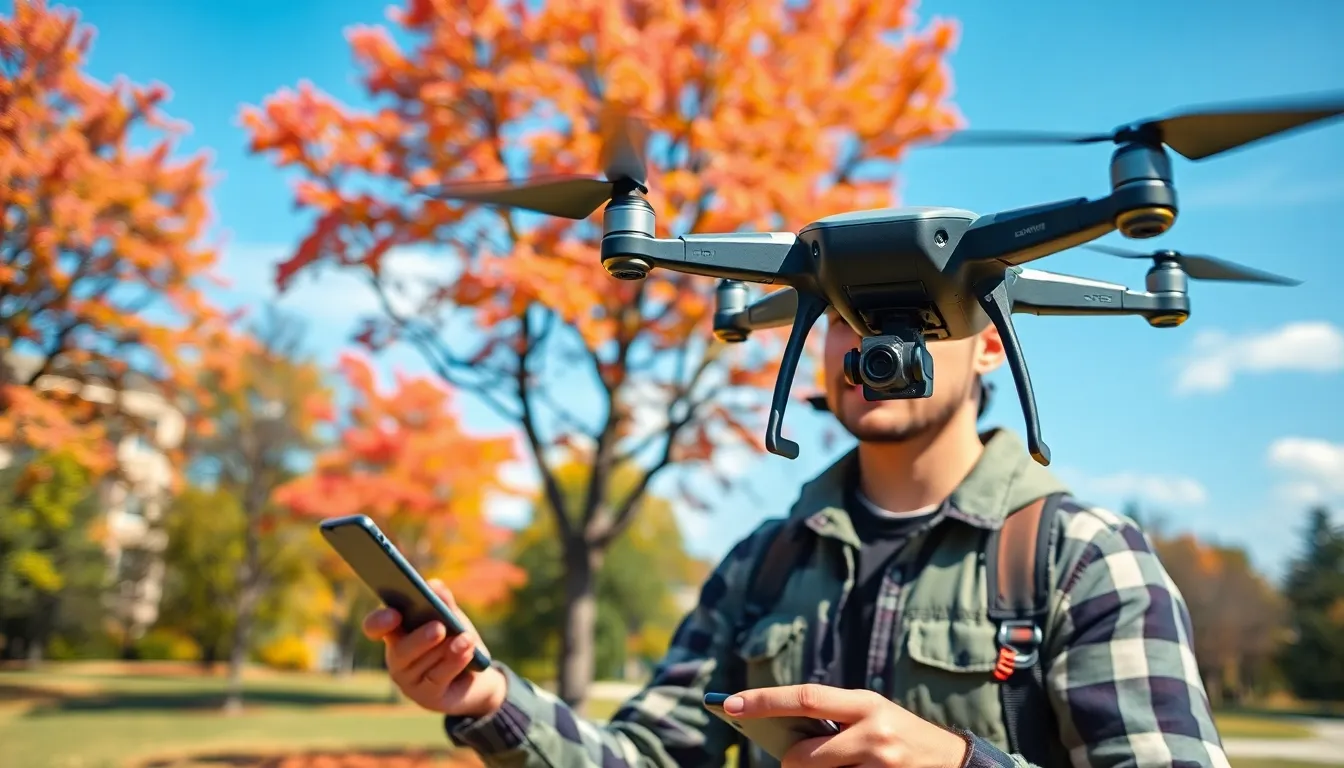
Consumer drones cater to a wide range of users, from hobbyists capturing stunning images to beginners exploring aerial flight. Various types meet different needs and interests.
Recreational Drones
Recreational drones serve as an entry point for new users. These devices often feature simple controls for easy operation. Many come equipped with basic cameras, allowing users to capture photos from unique perspectives. Lightweight designs enhance portability, making them perfect for outdoor adventures. Drone models vary in battery life, with some offering around 10 to 15 minutes of flight per charge. Users frequently enjoy flying these drones in parks or open spaces, where the open air enhances the experience.
Camera Drones
Camera drones highlight the importance of aerial photography and videography in today’s visual landscape. Equipped with high-resolution cameras, these drones capture stunning images and videos from above. Users often employ advanced stabilization technology, ensuring smooth footage during flight. Prosumer options cater to those seeking professional quality without the hefty investment. Battery life typically ranges from 20 to 30 minutes, enough to complete various projects. Many camera drones support live streaming, enabling real-time sharing of captured content across platforms.
Commercial Drones
Commercial drones serve various industries, offering innovative solutions for logistics, agriculture, and beyond.
Delivery Drones
Delivery drones transform how businesses transport goods. Companies like Amazon and UPS utilize these drones to enhance delivery efficiency. They navigate urban environments and reach remote locations with ease. Operating typically within a range of 1 to 5 miles, these drones carry small packages weighing up to 5 pounds. Delivery drones reduce transit times, providing consumers with rapid access to products. Regulatory support in areas like the FAA’s Remote ID requirements aids their integration into existing systems, ensuring safety and accountability.
Agricultural Drones
Agricultural drones revolutionize farming practices. These drones assist farmers by providing real-time aerial imagery and data analysis. They monitor crop health, assess soil conditions, and optimize irrigation strategies. Farmers benefit from increased efficiency and significant cost savings. Equipped with sensors, agricultural drones can cover vast areas quickly, mapping fields in minutes. Some models offer precision spraying capabilities, applying fertilizers and pesticides precisely where needed, reducing waste and environmental impact. Data collection from these drones enhances decision-making, ultimately leading to greater crop yields.
Military Drones
Military drones play a crucial role in modern warfare and defense strategies. Their advanced technology allows for a variety of applications, from surveillance to combat operations.
Surveillance Drones
Surveillance drones are essential for intelligence gathering. Capable of providing real-time imagery, they assist military operations by monitoring enemy movements. Equipped with high-resolution cameras and advanced sensors, these drones can fly at significant altitudes to capture detailed aerial footage. Their range typically extends from several miles up to 100 miles, enabling extensive coverage of designated areas. Additionally, some surveillance drones utilize infrared technology, making them effective in low-light conditions. The ability to transmit data instantly enhances situational awareness for command centers, thus improving decision-making.
Combat Drones
Combat drones are utilized for targeted strikes and operational support. Armed with precision-guided munitions, these drones can engage ground targets with high accuracy. They often operate autonomously or remotely, decreasing the risk to human pilots in combat scenarios. Some models can carry payloads of up to 1,500 pounds, allowing for multiple munitions to be deployed in a single mission. Combat drones frequently engage in missions that involve reconnaissance, air support, and close air support, showcasing their versatility in diverse combat situations. The combination of speed, agility, and firepower reinforces the military’s strategic capabilities.
Emerging Drone Types
Innovative drone types continue to emerge, expanding capabilities across various sectors. Hybrid drones, blending characteristics of multirotor and fixed-wing designs, benefit users with long flight durations and vertical takeoff. These drones enhance operational efficiency, making them suitable for tasks such as agriculture and environmental monitoring.
Delivery drones demonstrate significant advancements in logistics. They facilitate fast transport of small packages, often operating autonomously within defined airspaces. Companies like Wing and Zipline employ these drones to ensure rapid service, addressing last-mile delivery challenges effectively. The technology enables them to navigate urban landscapes while adhering to safety regulations.
Cargo drones represent another fascinating development. Equipped to carry heavier loads over increased distances, these drones assist industries in transporting goods. Industries focused on construction, e-commerce, and healthcare utilize cargo drones for their speed and capacity, with some models capable of carrying hundreds of pounds.
Eddy-current drones feature innovative propulsion systems, which enhance maneuverability. These drones enable precise movements, making them ideal for tasks requiring careful navigation in tight spaces. Applications span from inspections of infrastructure to search-and-rescue missions, showcasing their versatility.
Swarm drones embody advanced coordination technology, allowing multiple units to operate collaboratively. They accomplish complex tasks, such as data collection and mapping, while maintaining communication among the swarm. Military and industrial applications benefit from swarm technology, improving operational efficiency in various environments.
Lastly, solar-powered drones illustrate a push towards sustainability, harnessing solar energy to extend flight times. These drones support missions with minimal reliance on conventional energy sources, promoting eco-friendly practices among users. Their potential applications include environmental monitoring, wildlife tracking, and disaster response efforts.
Drones are no longer just gadgets for enthusiasts; they’ve become essential tools across various industries. With a diverse range of types available, users can find the perfect drone to meet their specific needs. Whether it’s for capturing breathtaking aerial shots or enhancing agricultural practices, each drone type offers unique capabilities.
As technology continues to advance, the possibilities for drone applications are expanding rapidly. From hybrid models to solar-powered designs, innovation is at the forefront of this evolving field. By understanding the different categories of drones, individuals and businesses can leverage these powerful tools to achieve their goals efficiently and effectively.