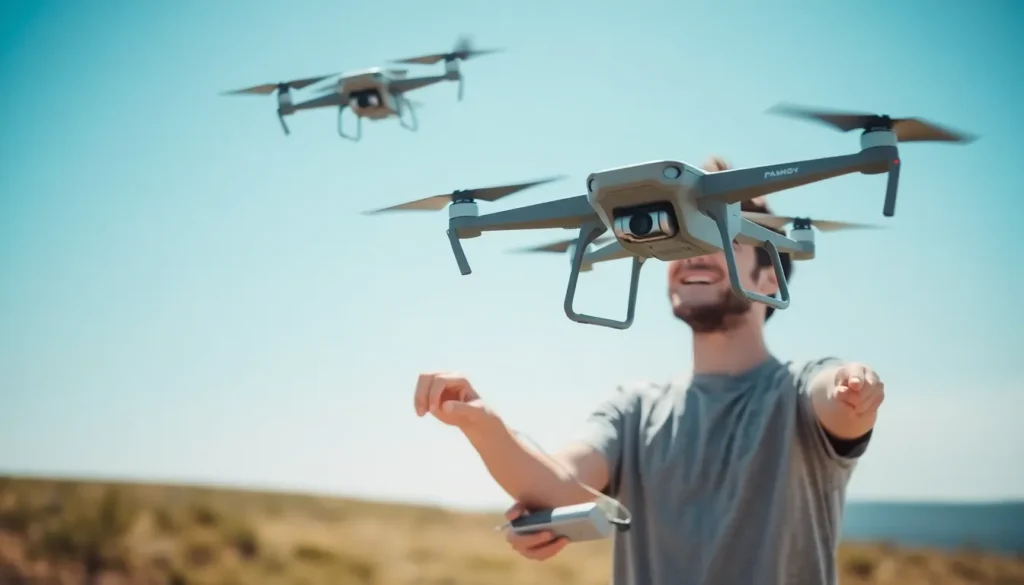
In a world where everything is connected, why should drones be any different? Imagine soaring through the skies while streaming your favorite cat videos in real-time. Drone WiFi connection isn’t just a tech trend; it’s the key to unlocking a whole new aerial experience. With the right setup, those flying gadgets can transform from mere toys into powerful tools for creativity and exploration.
Overview of Drone WiFi Connection
Drone WiFi connection refers to the wireless network capability that allows drones to transmit data to and from remote controls or mobile devices. Many modern drones utilize WiFi technology for seamless communication, increasing the range and quality of interaction between the operator and the drone. Enhanced WiFi connections support streaming real-time video feeds, which transforms how users capture aerial footage.
WiFi frequencies operate on two main bands: 2.4 GHz and 5 GHz. The 2.4 GHz band offers broader coverage but can experience interference from other devices. In contrast, the 5 GHz band provides higher speeds and less interference, making it ideal for high-definition video transmission. Certain drones allow users to switch between these frequencies to optimize their connection.
Latency also plays a crucial role in WiFi connectivity. Low-latency connections ensure a responsive flying experience, which is essential for controlling drones accurately during complex maneuvers. Users benefit from understanding the latency specifications to assess which drone suits their needs best.
Signal strength remains vital when flying drones beyond visual line of sight. WiFi range varies depending on environmental factors, including obstacles and interference. Recognizing the limits of WiFi range can prevent potential disruptions during flight.
Many drones come equipped with apps that enhance the flying experience through WiFi connections. Features like live telemetry data and automated flight modes improve user engagement and ease of operation. Engaging with these tools ensures users fully leverage their drone’s capabilities for creative projects.
Overall, the integration of WiFi in drones significantly impacts how users interact with their devices, enhancing both functionality and enjoyment. This advancement in technology offers exciting opportunities for exploration and creativity in aerial photography and videography.
Types of Drone WiFi Connections

Drones utilize different WiFi connection types, primarily differentiated by frequency bands. Understanding these variations helps in selecting the best option for specific needs.
2.4 GHz vs. 5 GHz Frequencies
2.4 GHz frequencies provide more extensive coverage, making them suitable for longer-range flights. This band works well in environments with obstacles. However, interference from other devices can be a concern. 5 GHz frequencies, on the other hand, deliver higher speeds and excel in high-definition video transmission. This band offers less range compared to 2.4 GHz, making it ideal for shorter distances. Users can choose based on their operational requirements and environment.
Advantages and Disadvantages
The advantages of 2.4 GHz include broader coverage and better performance in various locations. Its capability to penetrate obstacles can enhance usability. Disadvantages, however, consist of potential interference from microwaves and other wireless devices. As for 5 GHz, its higher speeds significantly improve video quality and overall responsiveness. Yet, the trade-off includes reduced range and limited capabilities in obstructed areas. Ultimately, users must weigh these pros and cons according to their specific flying conditions and goals.
Factors Affecting Drone WiFi Connection
Several factors influence the effectiveness of drone WiFi connections, impacting the overall flying experience.
Distance and Range
Distance affects the strength of WiFi signals significantly. As the drone flies farther away from the remote control or mobile device, the connection weakens. Drones operating on the 2.4 GHz band typically have a longer range, often extending to about 1,000 meters. In contrast, those using the 5 GHz band usually experience a maximum range of around 500 meters, giving priority to speed over distance. Users need to consider these limitations, especially during complex maneuvers. Maintaining optimal distances ensures reliable signal reception and smooth operation.
Environmental Interference
Environmental factors play a crucial role in WiFi connectivity for drones. Obstacles like trees, buildings, and hills can obstruct signals, weakening the connection. The 2.4 GHz band typically encounters more interference from other devices like microwaves and WiFi networks, which can compromise performance. Wind conditions also influence signal stability, particularly in remote areas. By assessing the flying environment before takeoff, users can effectively minimize potential interference and enhance communication between the drone and controller.
Enhancing Drone WiFi Connection
Improving a drone’s WiFi connection enhances flight experiences and capabilities. Focusing on key elements can significantly boost performance.
Tips for Better Performance
Consider flying in open areas to minimize signal interference. Maintaining a clear line of sight between the drone and controller prevents potential disruptions. Avoiding obstacles, such as buildings and trees, ensures stronger signals. Using the appropriate frequency band based on the flying environment maximizes benefits—2.4 GHz offers extended range, while 5 GHz improves video quality. Regularly updating firmware enhances the connectivity and functionality of drones. Familiarizing oneself with the drone’s operating range allows for optimal usage of its features.
Recommended Equipment
Investing in high-quality antennas can improve signal range and reliability. Antennas designed for drones significantly enhance WiFi performance. Utilizing additional range extenders helps maintain connection stability over longer distances. Mobile devices equipped with better WiFi capabilities enhance remote control experiences. Choosing drones with advanced built-in WiFi technology ensures superior data transmission. Monitoring software and applications also assist in optimizing performance during flights.
The integration of WiFi technology into drones revolutionizes how users engage with these devices. By understanding the nuances of frequency bands and optimizing connections, users can significantly enhance their flying experiences. Whether capturing stunning aerial footage or exploring new environments, a reliable WiFi connection is crucial for maximizing a drone’s capabilities.
Investing in quality equipment and staying informed about best practices ensures that users can navigate challenges effectively. As drone technology continues to evolve, embracing these advancements will lead to even greater opportunities for creativity and exploration in the skies.