As humanity gazes up at the stars, dreams of interstellar travel and colonizing distant planets are no longer just sci-fi fantasies—they’re fast becoming reality. Future space technology promises to propel us beyond our wildest imaginations, unlocking the secrets of the universe while making us wonder if we really need to pay rent on Earth anymore.
Overview of Future Space Technology
Future space technology encompasses various innovations that facilitate exploration beyond Earth. Key areas include propulsion systems, life support, and colonization capabilities.
Propulsion Systems
Advanced propulsion systems play a critical role in interstellar travel. Technologies such as ion propulsion and nuclear thermal engines demonstrate increased efficiency compared to conventional rockets. These systems reduce travel times significantly. Companies like SpaceX and NASA are researching and developing these technologies to address the challenges of deep space missions.
Life Support Technologies
Life support technologies focus on creating sustainable environments for human habitation in space. Closed-loop systems recycle air, water, and waste, reducing dependency on Earth supplies. Current projects, such as the International Space Station’s advanced life support systems, offer valuable insights into long-duration human spaceflight.
Colonization Capabilities
Colonization technologies aim to establish human presence on other planets. Innovations in habitat construction, such as 3D printing and bioengineering, enable the development of structures on extraterrestrial surfaces. Research on Martian soil and resources reveals potential for food production and construction materials, making colonization feasible.
Robotic Exploration
Robotic missions pave the way for human exploration. Rovers like Perseverance gather important data on environments and resources. Drones and autonomous vehicles assist in surveying other planetary bodies, reducing risks for human explorers.
Space Mining
Space mining presents opportunities for resource acquisition. Extracting water and minerals from asteroids and the Moon could support long-term missions. Companies are investing in technologies to assess the feasibility and profitability of this venture.
Future space technology integrates various elements essential for safe, efficient exploration and potential colonization of outer space.
Advancements in Propulsion Systems
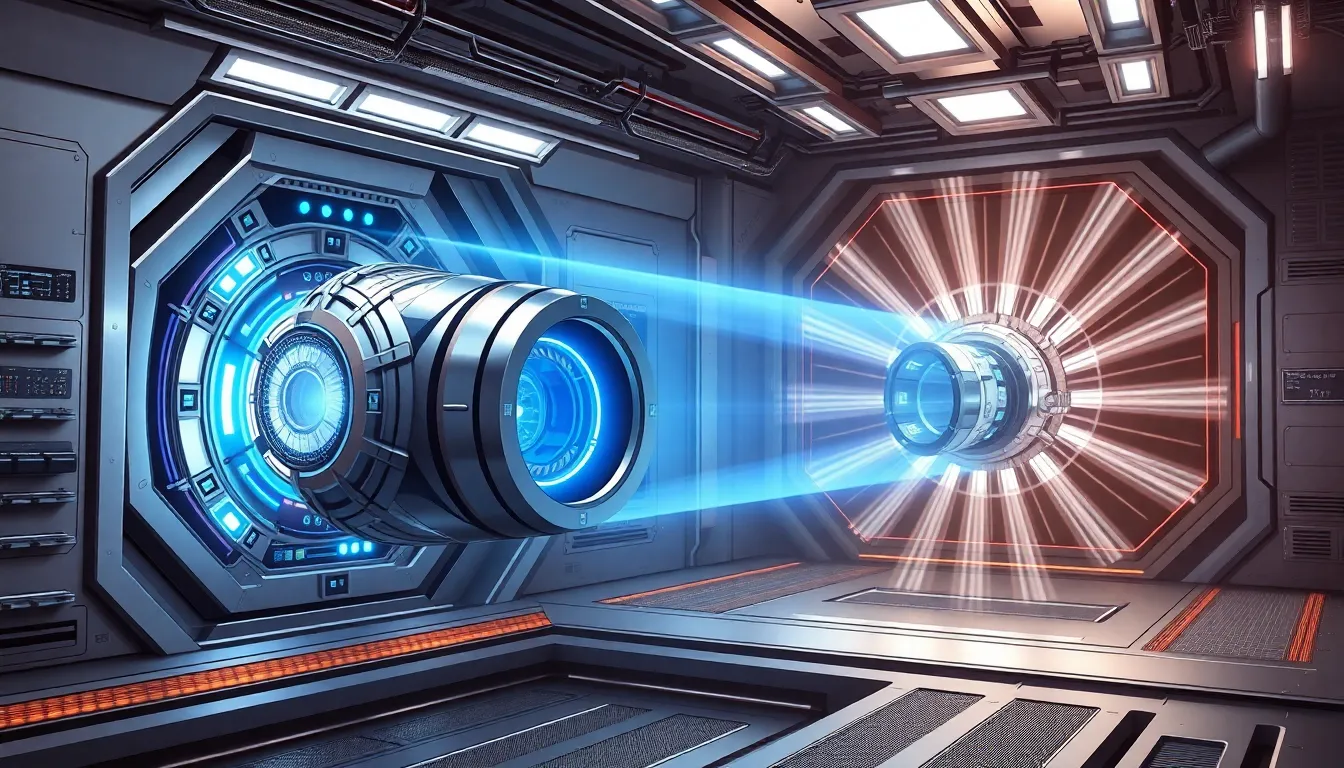
Advancements in propulsion systems play a critical role in the push for deeper space exploration. Innovative technologies enhance travel efficiency and reduce mission durations, making interstellar journeys more feasible.
Ion Thrusters
Ion thrusters are a leading technology in modern propulsion systems. They operate by ionizing gas, creating charged particles that are expelled to generate thrust. This method provides a significantly higher efficiency than traditional chemical rockets. NASA’s Solar Electric Propulsion system, which utilizes ion thrusters, can operate for longer periods, allowing for sustained acceleration. Missions like the Dawn spacecraft demonstrate the viability of ion propulsion, enabling it to travel vast distances while using less fuel.
Fusion Propulsion
Fusion propulsion represents a revolutionary approach to space travel. By combining lightweight atoms to form heavier ones, this method promises tremendous energy output with minimal fuel requirements. Concepts like the Project Orion and the Direct Fusion Drive aim to harness fusion reactions for propulsion. With the potential to reach a fraction of light speed, fusion propulsion could enable travel to Mars in weeks instead of months. Ongoing research into fusion technology could make these advanced propulsion systems a reality, reshaping human capabilities in space exploration.
Space Habitats and Colonization
Exploration beyond Earth focuses on developing habitats for human settlement in space. These advancements pave the way for colonization and establish sustainable living conditions.
Mars Colonization Plans
Mars colonization efforts revolve around technologies capable of supporting human life on the Red Planet. NASA’s Artemis program aims to return humans to the Moon, serving as a testing ground for Mars missions. SpaceX’s Starship intends to transport humans to Mars, with plans for establishing a self-sustaining colony. Plans include utilising in-situ resource utilization (ISRU) techniques to convert Martian materials into water, oxygen, and fuel, minimizing reliance on Earth supplies. Successful colonization depends on building habitats that protect against radiation and extreme temperatures while fostering agriculture and life support systems.
Space Stations of the Future
Future space stations will enhance human presence in low Earth orbit and beyond through advanced engineering and modular designs. These stations, such as the planned Lunar Gateway, will function as both research bases and transit hubs for deeper space exploration. Innovations in sustainable life support systems will allow for long-term habitation, using closed-loop ecosystems for air and water recycling. Additionally, space stations may host industries supporting space tourism and off-Earth manufacturing. The evolution of these platforms is essential for preparing humanity for multi-planetary living and fostering collaboration among nations in space exploration.
Robotics and AI in Space Exploration
Robotics and artificial intelligence (AI) play crucial roles in advancing space exploration efforts. These technologies enhance efficiency and safety in missions, making them indispensable for future endeavors.
Autonomous Rovers
Autonomous rovers significantly contribute to planetary exploration. Rovers like NASA’s Perseverance navigate Martian terrains independently, conducting scientific experiments without direct human control. Equipped with AI algorithms, these rovers adapt to changing environments, make decisions in real time, and analyze geological samples. Their capabilities reduce risks to human missions while providing invaluable data that informs future habitation strategies. Advanced autonomy enables rovers to extend their operational range, ensuring comprehensive exploration of diverse planetary surfaces.
AI for Data Analysis
AI drives the analysis of vast datasets collected during space missions. Machine learning algorithms process information from telescopes, rovers, and satellites, identifying patterns that human analysts might overlook. For instance, AI tools assist in classifying celestial objects and predicting phenomena, enhancing our understanding of the universe. By streamlining data analysis, AI accelerates scientific discoveries, allowing researchers to focus on interpreting results rather than sifting through raw data. This integration of AI in data processing is essential for optimizing future missions and achieving research objectives efficiently.
Sustainable Space Practices
Sustainable space practices ensure responsible use of resources and minimize environmental impact as humanity expands into the cosmos.
Space Debris Management
Space debris poses significant risks to spacecraft and future missions. Implementing effective debris tracking systems is essential for collision avoidance. Organizations like the European Space Agency (ESA) lead initiatives aimed at monitoring and mitigating debris in orbit, employing advanced sensors and tracking algorithms. Technologies such as active debris removal (ADR) can physically eliminate larger defunct satellites and fragments, utilizing robotic arms or nets for retrieval. In addition, designing spacecraft with end-of-life protocols, like deorbiting mechanisms, mitigates future debris generation.
Resource Utilization on Other Planets
Resource utilization on other planets, particularly through in-situ resource utilization (ISRU), plays a key role in sustainable practices. This approach focuses on converting local materials into usable resources, reducing reliance on Earth supplies. For example, ISRU techniques on Mars could extract water from the subsurface or produce oxygen and fuel from the planet’s carbon dioxide atmosphere. NASA’s plans for Mars missions emphasize developing technologies to harvest Martian resources, thus enabling sustained human presence. Utilizing lunar regolith for building materials and life support systems is another innovative strategy that may promote sustainability in extraterrestrial habitats.
The future of space technology holds immense promise for humanity’s journey into the cosmos. As advancements in propulsion systems and life support technologies continue to evolve, the dream of interstellar travel and colonization is becoming increasingly attainable.
Innovations in habitat construction and resource utilization pave the way for sustainable living beyond Earth. With the integration of robotics and AI, exploration efforts are becoming more efficient and safer.
The commitment to responsible resource management and sustainable practices will be crucial as humanity expands its reach. Ultimately, these developments not only enhance our understanding of the universe but also redefine what it means to be a multi-planetary species.