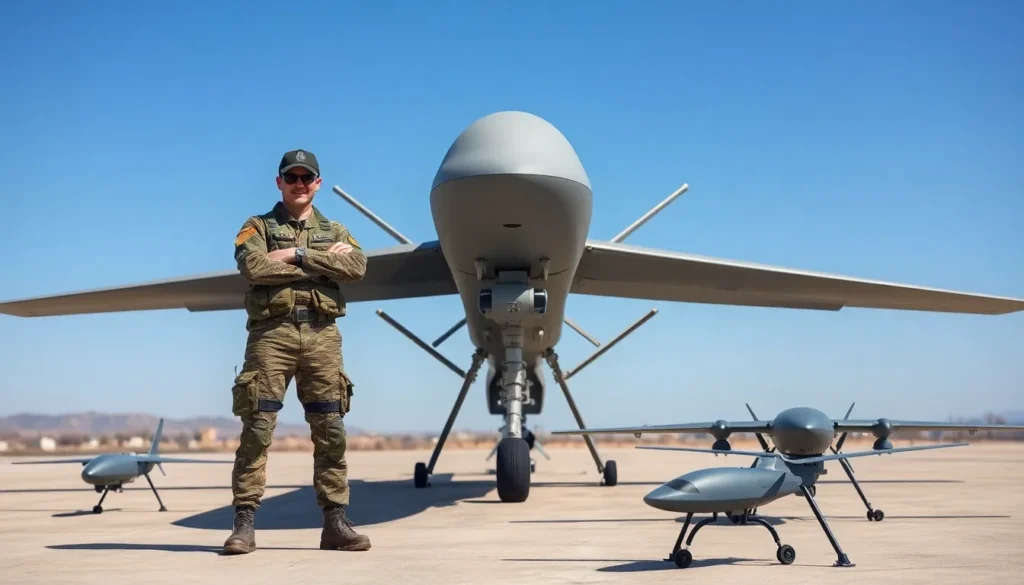
Military drones have become the superheroes of modern warfare, soaring through the skies with a blend of technology and stealth. But just how big are these flying marvels? They range from the size of a small bird to the wingspan of a commercial airliner, making them as diverse as the missions they undertake.
Overview of Military Drones
Military drones exhibit diverse sizes that cater to various operational requirements. Small drones, such as the RQ-11 Raven, measure about 5 feet in wingspan, designed for reconnaissance and surveillance in confined areas. Medium-sized drones, like the MQ-1 Predator, possess a wingspan of approximately 55 feet, capable of carrying payloads for intelligence gathering and targeted strikes.
Large drones, exemplified by the MQ-9 Reaper, feature a wingspan of about 66 feet, designed for sustained operations at higher altitudes. These drones can carry advanced sensor systems and weaponry, enabling them to execute complex missions. Some reconnaissance drones, such as the Global Hawk, display even larger dimensions, with wingspans reaching 130 feet, allowing for extensive surveillance coverage and long-duration flights.
Drone sizes also differ based on their intended capacities. The Hermes 900, for instance, has an approximate wingspan of 50 feet, optimized for tactical missions, integrating advanced communication and surveillance technology. Additionally, the Northrop Grumman X-47B, a prototype unmanned combat aerial vehicle, measures around 62 feet, showcasing its capability for carrier-based operations.
Overall, military drones are designed based on mission profiles, ranging from small tactical models to large strategic systems, reflecting advancements in aerodynamics and technology. Their sizes directly influence payload capacities, operational ranges, and mission types, playing critical roles in modern military operations.
Types of Military Drones
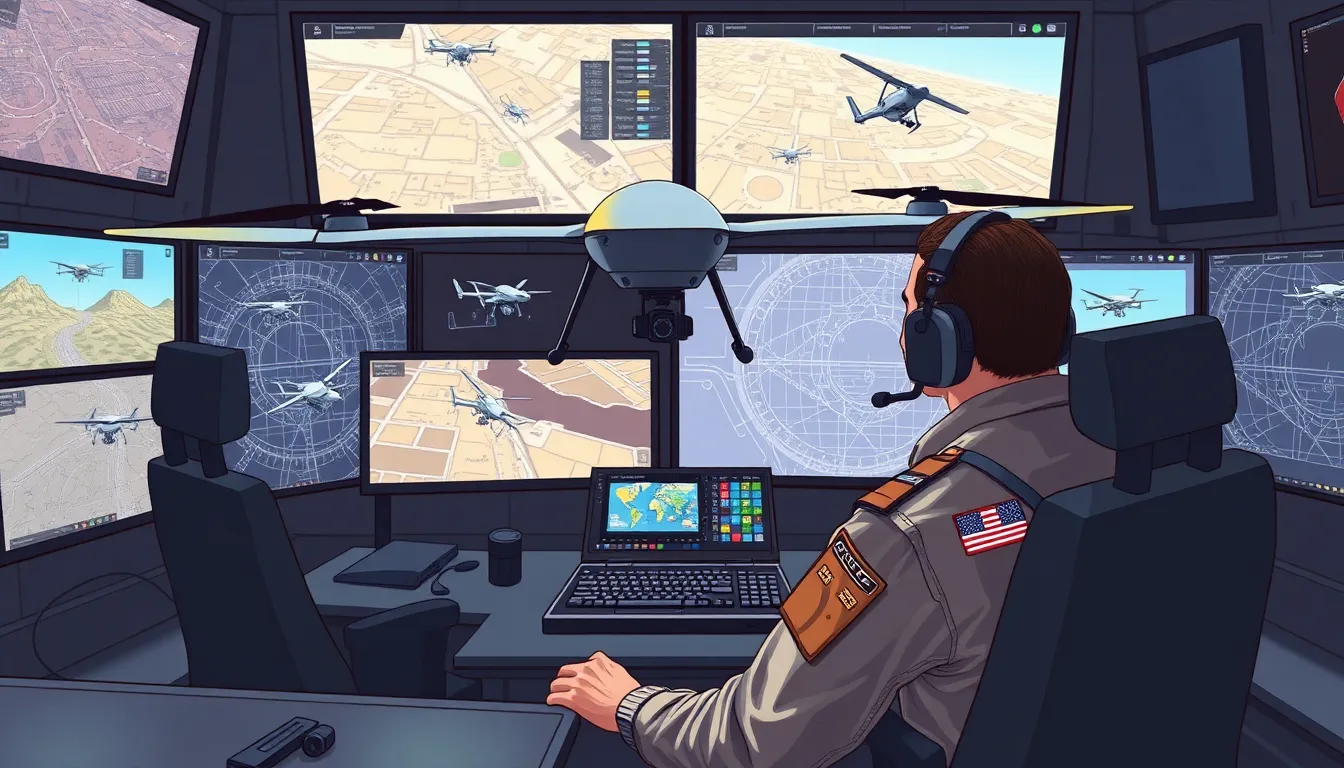
Military drones are categorized based on their specific functions and operational requirements. Each type serves unique missions, reflecting advancements in technology and design.
Reconnaissance Drones
Reconnaissance drones, such as the RQ-11 Raven and RQ-20 Puma, excel in gathering intelligence and conducting surveillance missions. These small, portable drones typically feature wingspans of 4 to 10 feet. They operate at lower altitudes and can capture real-time images and data, delivering critical information to ground forces. Reconnaissance drones often integrate advanced imaging sensors and communication systems, enabling effective battlefield awareness and navigation through challenging environments.
Combat Drones
Combat drones, like the MQ-1 Predator and MQ-9 Reaper, are crucial for offensive operations. Their sizes range from 27 to 66 feet in wingspan, allowing them to carry substantial payloads, including precision-guided munitions. These drones can perform targeted strikes while remaining at a safe distance from enemy combatants. Equipped with sophisticated avionics and weapon systems, combat drones provide enhanced situational awareness and strategic flexibility during military engagements.
Surveillance Drones
Surveillance drones, exemplified by systems like the Global Hawk and the MQ-4C Triton, focus on prolonged aerial observation. Their wingspans can exceed 130 feet, making them ideal for extensive missions over vast areas. These drones gather comprehensive intelligence through high-resolution imagery and signals intelligence. With long endurance capabilities, surveillance drones are vital in monitoring enemy movements and assessing battlefield dynamics, playing essential roles in strategic planning and situational assessment.
Size Comparisons
Military drones vary widely in size, reflecting their diverse roles and capabilities in modern warfare.
Small Drones
Small drones typically range from 1 to 5 feet in length, making them highly maneuverable and ideal for reconnaissance missions in confined areas. For example, the RQ-11 Raven is approximately 4.5 feet long, while the RQ-20 Puma measures around 6 feet. These compact designs allow for easy transport and rapid deployment, often utilizing advanced imaging sensors. Their lightweight nature enhances their ability to navigate challenging environments while providing real-time intelligence without drawing attention.
Medium Drones
Medium drones usually span 15 to 40 feet in length, supporting more robust missions such as surveillance and combat. The MQ-1 Predator, measuring about 27 feet, can carry payloads exceeding 1,000 pounds, allowing it to perform precision strikes. Similarly, the MQ-9 Reaper has a length of 36 feet and is designed for both reconnaissance and targeted operations. These drones offer an effective balance between operational range and payload capacity, making them essential for intelligence gathering and direct engagement.
Large Drones
Large drones possess wingspans that can exceed 100 feet, enabling long-duration flights and extensive surveillance capabilities. The Global Hawk, for instance, features a wingspan of about 130 feet and operates at high altitudes for comprehensive reconnaissance missions. Similarly, the Northrop Grumman X-47B, measuring approximately 38 feet, showcases advanced technological capabilities for carrier-based operations. These drones’ capacities allow for the integration of sophisticated sensor systems and weapons, playing crucial roles in strategic military operations and air superiority.
Factors Influencing Size
Military drones vary significantly in size due to several critical factors that address specific operational needs and technological advancements.
Purpose of Operation
Size directly corresponds to the intended mission of the drone. Reconnaissance drones, like the RQ-11 Raven, remain compact to navigate densely populated environments and conduct low-altitude surveillance. Medium-sized combat drones, such as the MQ-9 Reaper, balance payload capacity and operational range, allowing them to perform multiple roles including direct strikes and intelligence gathering. Large drones, exemplified by the Global Hawk, operate at higher altitudes to cover vast distances, collecting extensive data over long durations while remaining out of enemy reach.
Technology Advancements
Technological innovation significantly influences drone size. Enhanced propulsion systems allow for larger designs without escalating fuel consumption. Materials science improvements, including lightweight composites, enable larger drones to achieve superior performance without increased weight. Additionally, advanced sensor technologies and weapon systems often necessitate larger drone designs for effective integration. The shift toward autonomous flight systems also impacts size, as onboard servers require sufficient space to process complex data in real-time, further dictating design specifications based on mission requirements.
Military drones have transformed the landscape of warfare with their diverse sizes tailored to specific missions. From compact reconnaissance models to large surveillance platforms their dimensions reflect their operational capabilities and technological advancements. This evolution underscores the importance of size in determining payload capacity and mission effectiveness.
As military strategies continue to evolve the role of drones will only expand. Understanding the intricacies of drone sizes and their functions is crucial for grasping their impact on modern combat and intelligence operations. The future of military drones promises even more innovation as technology advances and mission requirements grow more complex.