In a world where the sky isn’t the limit, professional drone racers are redefining what it means to fly. Picture this: high-speed chases through neon-lit courses, heart-pounding competition, and the thrill of piloting a tiny aircraft at breakneck speeds. These pilots don’t just play with gadgets; they’re athletes in a sport that’s as intense as it is exhilarating.
Overview of Professional Drone Racers
Professional drone racers compete in high-stakes events, showcasing their piloting skills and the latest technology. Pilots navigate intricate courses designed with various obstacles, sharp turns, and challenging terrains. Speed plays a crucial role, with experienced racers reaching velocities up to 100 miles per hour.
Skills essential for success include precision control and quick decision-making. These racers often practice for hours, honing their techniques and improving their reflexes. Top competitors understand the nuances of their drones, customizing parts to enhance performance and handling.
The competitive landscape is diverse, featuring events organized by various leagues and associations. The Drone Racing League (DRL) and MultiGP are two prominent organizations offering structured competitions and rankings. Cash prizes can surpass $100,000, attracting racers globally.
Equipment selection impacts performance significantly. Racers typically use first-person view (FPV) goggles to immerse themselves in the flight experience. These goggles provide live video feeds from the drones, enhancing the racing experience and strategic decision-making.
Community plays a vital role in the sport, fostering connections among pilots, fans, and sponsors. Online forums and social media groups provide platforms for sharing tips and techniques. Engagement with fans enhances the excitement surrounding events, helping to grow the sport’s popularity.
Dedicated racers balance training with sponsorships, marketing their skills and the products they support. Successful pilots often collaborate with brands, showcasing cutting-edge technology and racing equipment. Overall, the realm of professional drone racing is dynamic, attracting talent and innovation continuously.
The Rise of Drone Racing
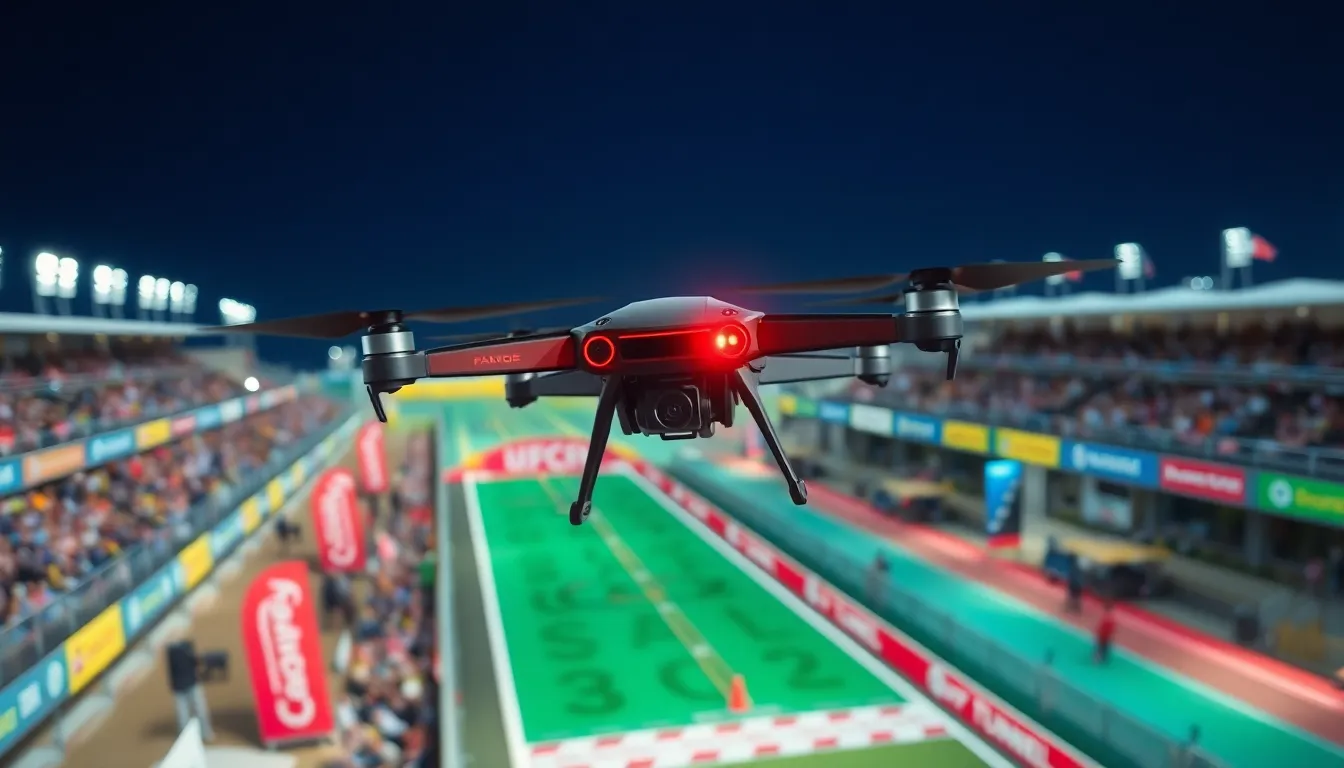
Drone racing has seen rapid growth, with more enthusiasts and participants joining the ranks of professional pilots. High-speed competition highlights both skill and technology.
History of Drone Racing
Drone racing originated in the early 2000s as hobbyists began modifying remote-controlled aircraft for speed and agility. The first organized races emerged in 2010, attracting a small yet passionate following. In 2014, the first major event, the Drone Racing Championships, took place in California, setting the stage for future competitions. This pivotal moment marked the transition from informal gatherings to structured events, leading to the establishment of leagues like the Drone Racing League in 2015.
Popularity in Recent Years
Increasing mainstream attention significantly impacted drone racing’s popularity from 2016 to 2023. Major networks began broadcasting events, capturing the thrill of competitive racing. Additionally, social media platforms allowed racers to showcase their skills and connect with fans. As interest surged, sponsorships and substantial cash prizes attracted professional talent. The inclusion of drone racing in events like the X Games further solidified its status as a recognized eSport. With millions of viewers tuning in, drone racing has emerged as a captivating spectacle, blending technology and athleticism.
Equipment Used by Professional Drone Racers
Equipment is crucial for achieving optimal performance in professional drone racing. Various components contribute to the speed and agility required for competitive success.
Types of Drones
Racers primarily use quadcopters, known for their stability and maneuverability. These drones typically feature lightweight frames that enhance speed while maintaining durability. Many professional racers customize their drones, integrating powerful motors and high-performance batteries. Some participants opt for racing drones equipped with advanced flight controllers for precise handling. Others prefer drones with customizable settings, allowing pilots to fine-tune them for specific tracks.
Essential Racing Gear
Pilots rely on first-person view (FPV) goggles to immerse themselves in the race, offering real-time video from the drone’s perspective. Controllers play a vital role, with ergonomic designs enhancing comfort during long races. Racing gloves are often used to improve grip and precision on the sticks. Additionally, a comprehensive toolkit is essential for on-site repairs, containing spare parts and tools necessary for quick fixes. Battery packs ensure that drones remain charged throughout events, enabling continuous racing without interruptions.
Skills Required for Success
Professional drone racers rely on a unique combination of skills that foster success in their high-speed competitions. These essential competencies encompass technical abilities and physical and mental resilience.
Technical Skills
Mastery of technical skills forms the foundation of any successful drone racer. Pilots must understand their drone’s mechanics, enabling them to make on-the-fly adjustments. Precision control over navigation, speed adjustments, and obstacle avoidance plays a crucial role in race outcomes. Additionally, proficiency in utilizing first-person view (FPV) goggles enhances situational awareness and depth perception. Familiarity with various racing applications and software remains beneficial, allowing racers to analyze their performance and optimize their strategies.
Physical and Mental Fitness
Maintaining physical and mental fitness becomes vital for drone racers facing intense competition. Rigorous hand-eye coordination training enhances reflexes and control during high-speed maneuvers. Improving stamina through regular exercise helps pilots withstand the prolonged focus required during races. Mental resilience is equally significant, as racers encounter high-pressure situations, demanding quick decision-making and strategic planning. Incorporating meditation and visualization techniques can aid in developing concentration and maintaining a competitive edge.
Major Drone Racing Events
Drone racing has several key events that highlight the sport’s excitement and competitiveness. These events attract top pilots from around the globe, showcasing their skills in front of enthusiastic crowds.
Notable Competitions
The Drone Racing League (DRL) hosts prestigious championship events, providing a platform for elite racers. Different formats, including both online and in-person races, deepen the event’s engagement. MultiGP organizes grassroots events across the world, encouraging local pilots to participate and develop their skills. The annual Drone Soccer World Cup also features teams competing for the title, blending education with competition. Another significant event is the World Drone Racing Championships, where top racers demonstrate their aerial prowess while vying for lucrative prizes.
Key Players in the Industry
Top-level racing teams contribute significantly to the industry’s growth and visibility. Teams like DRL’s “The Flying Frogs” and MultiGP’s “Team Rotor Riot” are known for their innovative approaches and advanced technology. Sponsorship partners, including major brands and tech companies, provide essential resources to enhance performance. Many acknowledged pilots, such as charles “Ndrone” Yang and Kat “Flygirl” Hsu, inspire future racers with their impressive achievements. Community-driven groups also emerge, fostering connections among enthusiasts and providing support like training for beginners.
The world of professional drone racing is a thrilling blend of technology and athleticism. As pilots navigate intricate courses at breathtaking speeds they redefine the limits of aerial competition. With growing mainstream recognition and substantial cash prizes the sport continues to attract a diverse range of talent.
The community surrounding drone racing plays a crucial role in its evolution fostering connections among racers and enthusiasts alike. As technology advances and events gain wider exposure the future of drone racing looks promising. This dynamic sport not only captivates audiences but also inspires the next generation of pilots eager to take to the skies.