Table of Contents
ToggleIn the thrilling world of space exploration, rocket staging systems are the unsung heroes, quietly powering humanity’s quest to conquer the cosmos. Imagine trying to launch a massive rocket with all its fuel and payload at once—it’s like trying to sprint a marathon while carrying a refrigerator on your back. Not exactly a recipe for success! By shedding weight in stages, these ingenious systems make it possible to reach the stars without breaking a sweat.
But why should anyone care about rocket staging? Well, it’s not just about looking cool in a space suit. The efficiency gained from staging is crucial for pushing boundaries, exploring distant planets, and even dreaming of interstellar travel. So buckle up as we dive into the fascinating mechanics behind rocket staging systems, where engineering meets imagination, and every launch is a step closer to the final frontier.
Overview of Rocket Staging Systems
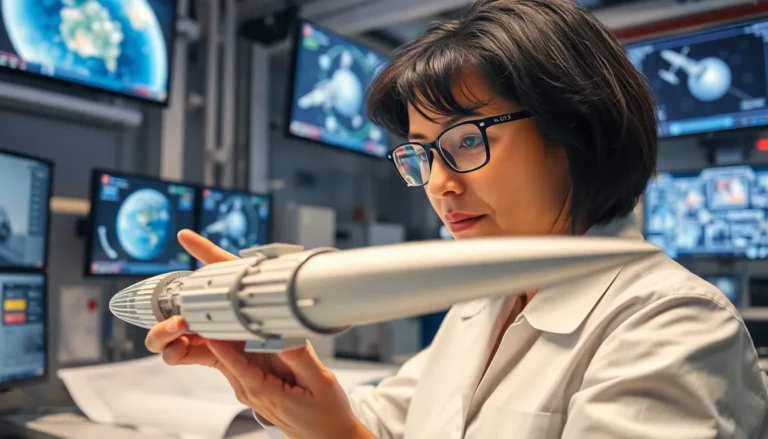
Rocket staging systems represent a fundamental aspect of space vehicle design. These systems break a rocket’s ascent into multiple phases, optimizing efficiency. By discarding used engines and fuel tanks, rockets can reduce their weight progressively, which enhances lift capacity.
Two common types of staging exist: parallel and serial. Parallel staging features multiple boosters fueling the rocket simultaneously, while serial staging employs a sequential firing of stages. Each method carries specific advantages. For example, parallel staging maximizes thrust at liftoff, whereas serial staging allows for greater control in flight.
The function of rocket staging systems proves critical in long-range missions. They enable spacecraft to leave Earth’s atmosphere more effectively, conserve resources during travel, and safely reach their destinations. The Saturn V, used during the Apollo missions, serves as a historical example of successful rocket staging. Its three stages powered it to the moon, showcasing the effectiveness of multi-stage designs.
Recent advancements in technology continue to refine staging approaches. Innovations now include reusable stages that return to Earth, further minimizing costs and maximizing sustainability in space exploration. Companies like SpaceX have pioneered this method, achieving significant reductions in launch expenses.
Staging plays a pivotal role in facilitating deeper exploration of the solar system. As missions target distant planets and even interstellar travel, optimized staging systems remain vital. The development of these systems enables humanity to push the boundaries of space and understand the cosmos better.
Types of Rocket Staging Systems
Rocket staging systems consist of various types that enhance performance and efficiency during ascent. These systems vary based on the fuel type and design.
Solid Rocket Boosters
Solid rocket boosters utilize solid propellant to generate thrust. They ignite a mix of fuel and oxidizer packed into a casing. Multiple solid rocket boosters enhance initial lift-off power, as seen in the Space Shuttle’s design. Their simplicity and reliability provide a sturdy option, even in extreme conditions. Once ignited, these boosters burn until the fuel is exhausted, after which they detach from the main vehicle. Industries frequently use these boosters for military applications and space missions, emphasizing their versatility.
Liquid Rocket Stages
Liquid rocket stages rely on liquid propellants to achieve thrust. They consist of fuel and oxidizer stored in separate tanks that combine during combustion. This design allows for precise control over thrust and burn rates. Notable examples include the Saturn V’s second stage, which optimized fuel usage for reaching orbit. Liquid stages often enable restarts in flight, enhancing mission flexibility. Consequently, these stages support complex missions, including satellite deployments and interplanetary travel.
Hybrid Rocket Systems
Hybrid rocket systems merge solid and liquid fuels to create thrust. These systems use a solid fuel grain combined with a liquid oxidizer, balancing the advantages of both types. Increased performance and controllability become possible due to the adjustable fuel flow in hybrid designs. Notable innovations in this area include the Virgin Galactic SpaceShipTwo, which employs hybrid technology for suborbital flights. Safety features in these systems often outperform traditional solid rockets, attracting interest for both commercial and research applications.
Importance of Rocket Staging
Rocket staging plays a vital role in optimizing space travel. This system facilitates the efficient ascent of rockets by shedding weight methodically.
Efficiency and Performance
Efficiency significantly improves through rocket staging. Multi-phase launches reduce the overall mass, allowing engines to operate more effectively. Staging allows rockets to achieve higher speeds with less fuel. Additionally, this approach conserves vital resources, essential for long missions. Historical success stories, like the Saturn V rocket, illustrate its impact on performance. Enhanced flight control during staging phases not only improves trajectory accuracy but also maximizes thrust precisely when needed. Recent innovations, including reusable stages from companies such as SpaceX, have shown a remarkable impact on performance metrics in modern rocket design.
Payload Capacity
Payload capacity increases due to effective staging systems. By discarding empty stages, rockets minimize their mass and free up space for critical cargo. This capacity is crucial for deploying satellites and scientific instruments into orbit. Capacity directly affects mission viability, allowing for larger payloads without compromising performance. Advanced designs like those seen in hybrid rocket systems further improve payload efficiency. Overall, sophisticated staging strategies enable rockets to carry more substantial loads, thereby enhancing their utility in various space endeavors.
Challenges in Rocket Staging
Rocket staging systems face several challenges that can affect mission success. Significant issues arise in engineering and reliability, both crucial for optimizing performance during launch.
Engineering Complexities
Designing rocket staging systems involves intricate engineering challenges. Complex interactions between stages must be accounted for to ensure smooth separation and operation. Engineers must coordinate multiple components, including fuel management and structural integrity, to support the vehicle’s weight as stages detach. Each stage’s ignition sequence requires precise timing to prevent catastrophic failures. Materials used in construction also play a major role in temperature endurance and pressure tolerance. Advanced computational simulations help predict these variables, but unexpected conditions can still arise. Continuous testing and refinement are necessary to safeguard mission objectives.
Reliability Concerns
Reliability remains a top priority in rocket staging. Any failure during a stage separation can jeopardize the entire mission. Historical data reveals that staging events have caused several high-profile launch failures, stressing the importance of robust systems. Regular inspections and maintenance protocols can minimize risks, but human error can introduce unforeseen complications. Furthermore, the integration of reusable stages adds layers of complexity, necessitating thorough assessments post-flight. Engineers continuously develop new materials and technologies to enhance reliability. As missions become more ambitious, ensuring that staging systems operate flawlessly under demanding conditions is essential for future successes.
Future of Rocket Staging Systems
Advancements in rocket staging systems promise to transform space exploration. Companies like SpaceX are pioneering reusable stages, making launches more economical. This shift toward sustainability not only lowers costs but also increases the frequency of missions.
Emerging technologies stand to revolutionize multi-stage designs. These innovations enhance efficiency and performance during ascent, allowing rockets to shed mass more effectively. Design improvements focus on better materials and enhanced control mechanisms, leading to greater reliability during critical phases.
The possibility of in-orbit refueling also reshapes future staging systems. By refueling in space, rockets can extend their range and capabilities, enabling deeper exploration of distant celestial bodies. This approach significantly alters mission planning and payload strategies.
Integration of artificial intelligence further enhances staging processes. AI can optimize timing and separation sequences, ensuring smoother operations during critical moments. Utilizing machine learning algorithms for predictive maintenance can minimize downtime and increase overall mission success.
Collaboration among industry leaders drives these advancements forward. Companies, research institutions, and governmental agencies are working together to address challenges in rocket staging systems. By sharing knowledge and resources, teams can tackle complex issues in design and engineering.
As missions evolve, so do the complexities involved in rocket staging. Innovations must focus on making systems more adaptable to various mission profiles. Customizing staging techniques for specific objectives plays a vital role in achieving successful outcomes.
Changing the paradigm of space exploration requires ongoing development. Future stages may incorporate advanced propulsion systems that further boost performance and efficiency. All these factors contribute to an exciting era for rocket staging systems, highlighting their crucial role in the journey to uncover the mysteries of the universe.
Rocket staging systems are pivotal in the realm of space exploration. By effectively shedding weight during ascent, these systems enhance the efficiency and performance of rockets. As the industry moves toward more advanced designs and technologies, the potential for deeper exploration of the cosmos becomes increasingly attainable.
The integration of reusable stages and innovative materials promises to revolutionize how missions are conducted. With ongoing advancements, the future of rocket staging looks bright, offering exciting possibilities for humanity’s quest to understand the universe. The journey into space is just beginning, and rocket staging systems will continue to play a crucial role in shaping that journey.