In a world where smartphones are practically an extension of our hands and self-driving cars are just around the corner, space age technology has become more than just a futuristic dream—it’s a reality. From the moment humans first gazed at the stars, the desire to explore the cosmos has sparked innovation that’s reshaping everyday life. Who knew that the gadgets we take for granted today owe their existence to those daring astronauts and their out-of-this-world missions?
What Is Space Age Technology?
Space age technology refers to the innovations and advancements that emerged during and following the era of space exploration, particularly from the late 1950s onwards. This technological domain has significantly influenced various industries and everyday life, with numerous applications stemming from the original space programs.
Key Characteristics of Space Age Technology:
- Miniaturization: Space missions necessitated compact and lightweight equipment, resulting in the development of miniaturized components. This advancement led to smaller electronics, such as handheld devices and wearable technology.
- Advanced Materials: The need for durability and heat resistance in space prompted the creation of new materials. Innovations like carbon composites and heat-resistant alloys now find applications in consumer goods and construction materials.
- Communication Systems: Space age technology has transformed global communication. Satellite communication established instantaneous connectivity, enabling modern telecommunication systems that underpin smartphones and internet access.
- Robotics: Robotics played a crucial role in space exploration. Innovations in autonomous systems influence industries, including manufacturing, healthcare, and transportation, enhancing efficiency and precision.
- Remote Sensing: Space technology paved the way for advanced remote sensing capabilities. Satellites provide critical data for agriculture, climate monitoring, and disaster management, making significant contributions to environmental management.
Significant Innovations:
- GPS Technology: The Global Positioning System, initially developed for military use, revolutionized navigation and location tracking for everyday consumers, from navigation apps to logistics management.
- Medical Imaging: Developments in imaging technologies, such as MRI and CAT scans, benefited from advancements made during space missions, improving diagnostics and patient care.
- Energy Solutions: Research into solar panels and renewable energy sources was spurred by space programs, promoting sustainable practices in energy consumption.
Space age technology exemplifies the interplay between exploration and innovation, illustrating how humanity’s quest to understand the cosmos generates advancements that permeate daily life.
Key Innovations in Space Age Technology
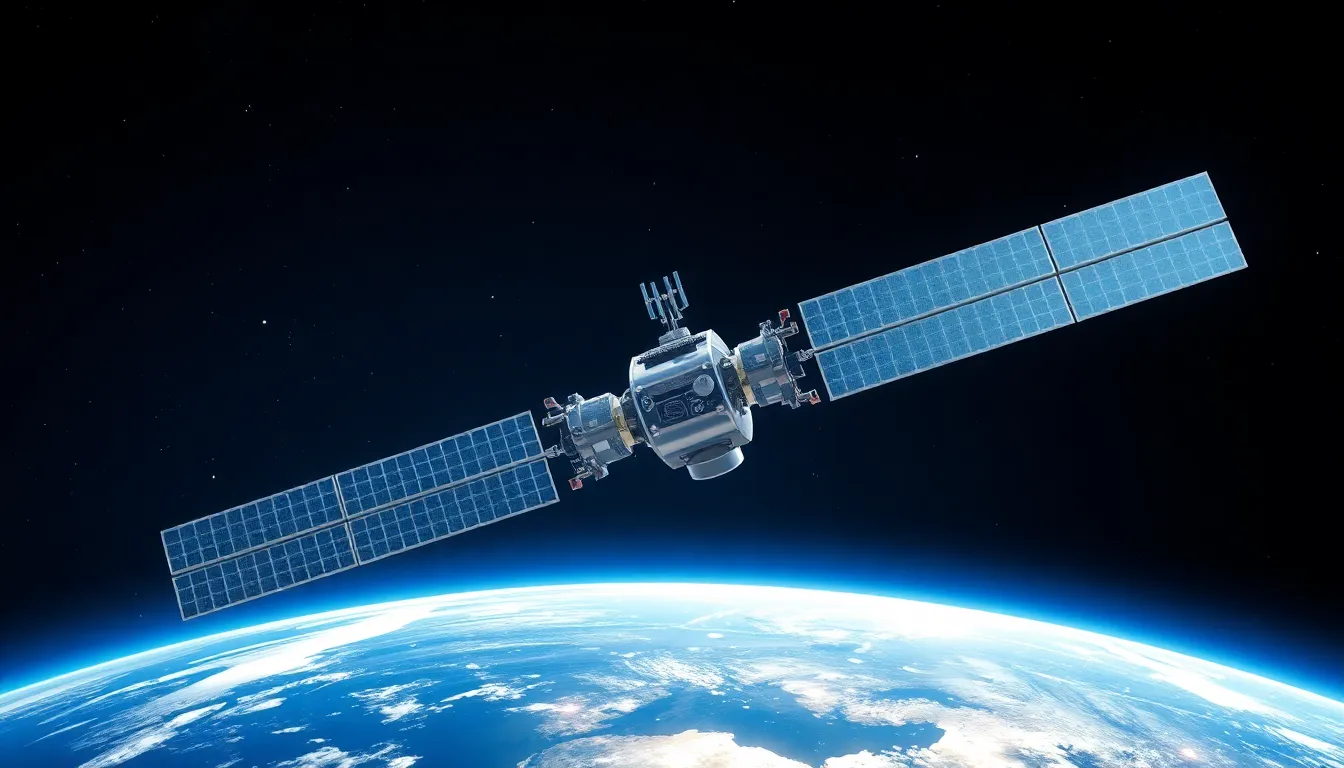
Space age technology has driven remarkable advancements that fundamentally altered multiple sectors. Key innovations span communication, vehicle design, and materials science.
Satellite Communications
Satellite communications transformed the way people connect worldwide. The advent of satellites enabled global broadcasting, internet access, and mobile phone communications. Notable systems, like Geostationary satellites, maintain fixed positions relative to the Earth’s surface, optimizing signal strength and reliability. Innovations such as low-Earth orbit satellites improve latency and coverage, facilitating services like real-time data transmission. Today, these systems support essential services ranging from weather forecasting to disaster management, showcasing their integral role in modern connectivity.
Space Exploration Vehicles
Space exploration vehicles exemplify cutting-edge engineering and technology. Rockets, such as SpaceX’s Falcon 9, incorporate reusable components, significantly reducing spacecraft costs. These vehicles enhance mission flexibility and sustainability. Additionally, rovers like NASA’s Perseverance utilize advanced materials and AI technology to navigate harsh extraterrestrial environments autonomously. Innovations in propulsion systems, such as ion drives, enable more efficient travel beyond Earth’s orbit. Overall, these vehicles illustrate the significant strides in design and functionality achieved through space age technology.
Applications of Space Age Technology
Space age technology integrates innovations that redefine various sectors, enhancing daily activities and scientific research.
Impact on Everyday Life
Space age technology significantly affects everyday life through advancements in consumer electronics. GPS technology, originally developed for navigation, now supports location-based services in smartphones and vehicles. Miniaturized components enable the development of wearable devices, including fitness trackers and smartwatches. Satellite communication systems enhance global connectivity, facilitating instant access to information across the globe. Additionally, technologies like remote sensing support improved weather forecasts and disaster management, contributing to overall safety. These innovations demonstrate the seamless integration of space-derived technologies into daily routines.
Advancements in Science and Research
Space age technology drives substantial progress in scientific research across multiple fields. Satellite-based remote sensing provides critical data for environmental monitoring, including climate change assessment and natural resource management. Robotics, developed for space missions, enhance experimentation in laboratories and reduce risks in hazardous environments. Medical advancements, such as MRI and CAT scans, stem from technology initially designed for space applications, improving diagnostic capabilities. Moreover, research into advanced materials fosters breakthroughs in various disciplines, paving the way for novel solutions in engineering and medicine. These contributions exemplify how space exploration fuels scientific advancements crucial for societal development.
Future of Space Age Technology
Future advancements in space age technology promise to further reshape human life and exploration. Enhanced capabilities in artificial intelligence (AI) will likely optimize automation in spacecraft, improving mission efficiency. AI technologies can analyze vast data sets from space missions, yielding new insights while minimizing manual workload.
Smart materials, engineered for flexibility and strength, may become standard in aerospace applications. Such materials can withstand extreme temperatures and reduce weight in vehicles, enhancing both performance and safety. Innovations may incorporate self-healing properties, allowing spacecraft to recover from minor damages autonomously.
In satellite technology, megaconstellations of small satellites are expected to boost global internet access significantly. These networks enhance connectivity in remote areas, bridging the digital divide and fostering economic development. Opportunities may arise for new communication applications, expanding services in both urban and rural settings.
The potential of in-situ resource utilization (ISRU) may revolutionize space exploration. Utilizing local resources on celestial bodies like Mars for fuel and building materials can reduce the cost and complexity of space missions. This leads to more sustainable exploration efforts and increases the feasibility of human settlements beyond Earth.
Advancements in propulsion technologies, such as ion and nuclear thermal engines, could enable faster interplanetary travel. Reduced travel times between planets will open possibilities for manned missions to destinations like Mars within a more practical timeframe. Innovations in energy sourcing and storage from solar and nuclear power may further support extended missions.
Robotics is set to play an essential role in future space missions. Continued development in robotic systems will enhance exploration capabilities, enabling remote operation of rovers and probes in hazardous environments. These technologies will gather data, perform repairs, and execute complex tasks autonomously, paving the way for more ambitious exploratory endeavors.
Space age technology has undeniably transformed the way people live and interact with the world around them. Its influence extends far beyond the realm of space exploration, permeating everyday life through innovations that enhance communication, navigation, and health. As advancements continue to emerge, the potential for further breakthroughs is immense.
The ongoing quest for knowledge about the cosmos fuels a cycle of innovation that benefits society at large. With each technological leap, humanity moves closer to a future where the boundaries of possibility expand, promising exciting developments on Earth and beyond. Embracing this technology not only enriches lives today but also lays the groundwork for a future filled with exploration and discovery.